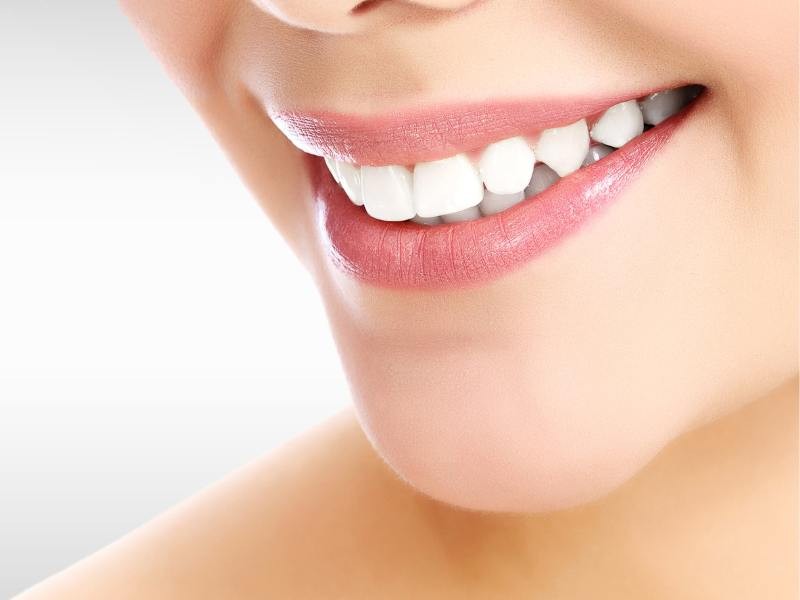
Nowadays it is increasingly common to find smile transformations on social networks, especially performed by artists and public figures. The speed with which information circulates means that many people seek aesthetic dental treatments with the expectation of quick results and, often, without any tooth wear.
Although aesthetic dentistry has evolved significantly, there are some misunderstandings that need to be clarified. Not all treatments can be performed without tooth wear, and the choice of the best technique depends on the clinical characteristics of each patient.
At Alora Clínic , in Ramada, Odivelas, Lisbon, we value an individualized planning, based on advanced digital technology and a detailed analysis to provide natural, functional and harmonious results.
1. What are lenses, laminates and dental veneers?
Lenses, laminates and dental veneers are aesthetic restorations in ceramic applied on the front surface of teeth to improve:
- color;
- form;
- size;
- symmetry;
- smile harmony.
Although they are often used synonymously, there are important differences between these options.
2. What are dental contact lenses?
Dental contact lenses are extremely thin ceramic laminates.
They receive this name because of the small thickness, similar to the concept of ophthalmic contact lenses.
They are usually indicated for situations where there is a need to add structure to the smile, with minimal or no tooth wear.
3. What are ceramic laminates?
Ceramic laminates correspond to a category of adhesive aesthetic restorations produced in ceramics.
Within this group are:
- dental contact lenses;
- minimally invasive ceramic veneers;
- traditional facets.
The main difference is in the thickness and amount of change required in each clinical case.
4. What are ceramic facets?
Ceramic facets generally have greater thickness when compared to lenses.
They are often indicated for:
- darkened teeth;
- fractures;
- tooth wear;
- significant changes in shape;
- more extensive aesthetic corrections.
5. Is it possible to do treatments without tooth wear?
In some cases, yes.
However, this possibility depends on the characteristics of the smile and the aesthetic objective.
Cases requiring only volume increase or small changes may allow minimally invasive treatments.
Not all patients are indicated for totally wear-free techniques.
6. Why can not all cases be treated without wear and tear?
Some teeth may have characteristics that require prior adaptation of the dental structure.
Among these situations may be:
- Misaligned Teeth;
- vestibular teeth;
- unsatisfactory old restorations;
- darkened teeth;
- important changes in form.
Only adding material without proper correction can cause an artificial and excessively voluminous result.
7. What does additive restoration mean?
An additive restoration occurs when there is a need to increase or complement the structure of the tooth.
In these situations, treatment may require little or no tooth wear.
This type of approach is usually used for:
- close gaps between teeth;
- increase tooth size;
- improve small changes in shape;
- harmonize proportions.
8. What is digital smile planning?
Every aesthetic treatment should start with detailed planning.
Currently, digital technology allows you to perform:
- intraoral scan;
- clinical photography;
- digital waxing;
- virtual simulation;
- CAD/CAM planning.
This helps predict results with greater accuracy.
9. What is diagnostic waxing?
Diagnostic waxing is an important step in aesthetic planning.
This is a physical or digital simulation of the expected result.
Allows:
- evaluate proportions;
- analyze volume;
- planning abrasions;
- to visualize the future smile.
10. Can I see the result before the treatment?
In many cases, yes.
Digital technology allows you to create simulations that help the patient visualize possible results before the start of treatment.
11. Can misaligned teeth be corrected only with veneers?
Not always.
In some cases, more important changes in dental positioning may benefit previously from orthodontic treatment.
This allows to preserve a greater amount of dental structure.
12. When can orthodontics be most indicated?
Orthodontic treatment can be considered when there are:
- dental dressing;
- important deviations;
- wrong bite;
- accentuated misalignments;
- functional changes.
Correcting the position of the teeth beforehand can allow for more conservative aesthetic approaches.
13. Can forcing an aesthetic solution be harmful?
Inadequate treatment can compromise:
- facial harmony;
- chewing function;
- durability;
- aesthetic naturalness.
The goal should always be to achieve a balanced and healthy smile, respecting the individual characteristics of the patient.
14. Do lenses and facets have long durability?
Durability depends on several factors:
- quality of materials;
- oral hygiene;
- patient habits;
- bruxism;
- Periodic maintenance.
With proper monitoring, they can present long functional and aesthetic stability.
15. Conclusion
Lenses, laminates and dental veneers represent modern aesthetic dentistry solutions capable of transforming the smile in a natural and personalized way.
However, the choice of the best approach always depends on individualized assessment, detailed planning and analysis of the clinical characteristics of each patient.
Not all cases can be performed without tooth wear, and the correct indication is essential to achieve harmonious, long-lasting and natural results.
At Alora Clínic , in Ramada, Odivelas, Lisbon, we use advanced digital technology to create personalized and carefully planned aesthetic treatments.
If you want to improve your smile and clarify which is the best option for your case, you can schedule an evaluation consultation with our team.