Denture Treatment in Ramada, Odivelas, Lisbon
The dental prosthesis treatment is indicated for patients who need to replace lost or damaged teeth, restoring the functionality of the mouth and the aesthetics of the smile. Dentures offer an effective solution to problems caused by caries, periodontal disease, or trauma.
At Alora Clinic , in Ramada, Odivelas, Lisbon , prosthesis treatment begins with a detailed evaluation of the oral cavity. The dentist will assess the health of the remaining teeth, gums and bone structure, determining the best approach for treatment.
What is denture treatment?
The denture treatment involves replacing missing or damaged teeth with custom-made artificial devices. There are different types of prostheses, including fixed, removable and implant prostheses, which are chosen based on the needs of the patient and the condition of their oral cavity.
The prosthetic treatment is essential to restore chewing function, improve the aesthetics of the smile and prevent future problems, such as displacement of the remaining teeth or problems in the bite.
When is denture treatment indicated?
The denture treatment is indicated for patients who have lost one or more teeth due to caries, gum disease or trauma. Dentures are also used in cases where damaged teeth cannot be restored with other techniques, such as restorations.
The main reasons to perform the dental prosthesis treatment include:
- loss of teeth due to caries or periodontal disease;
- damaged or fractured teeth that need to be replaced;
- difficulty chewing or speaking due to lack of teeth;
- need to improve smile aesthetics;
- need to restore mouth function and prevent future problems.
The dental prosthesis treatment in Ramada, Odivelas, Lisbon is an effective solution to restore oral health and guarantee the function of the teeth.
How does clinical evaluation work for the treatment of dentures?
The clinical evaluation for the dental prosthesis treatment begins with a complete examination of the oral cavity. The dentist will check the health of the remaining teeth, gums and bone structure, in addition to analyzing the alignment of the bite.
Assessment may include:
- clinical examination of teeth and gums;
- evaluation of bone and periodontal health;
- radiographs to examine the bone structure and the position of the teeth;
- discussion on the type of prosthesis ideal for each case (fixed, removable or on implants);
- treatment planning and explanation of the procedure.
After this evaluation, the dentist will create a personalized treatment plan, indicating the type of prosthesis and the steps required for placement.
What are the types of dentures?
There are different types of dental prostheses , which can be used depending on the needs and conditions of each patient.
Removable dentures
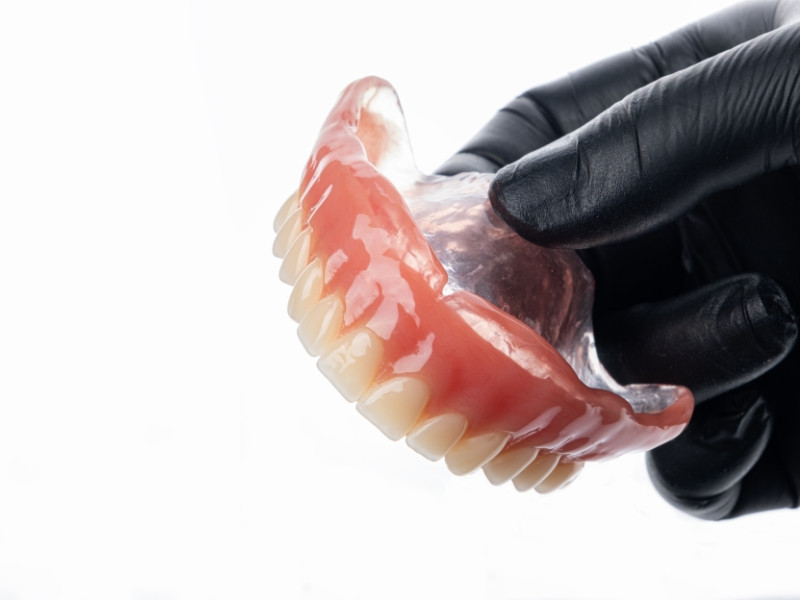
The removable prostheses can be total, replacing all the teeth of an arch, or partial, replacing only a few missing teeth. They can be removed for cleaning and maintaining good oral hygiene.
Fixed prostheses
The fixed prostheses are permanently fixed in the mouth and cannot be removed by the patient. They include crowns and bridges, which are used to replace missing teeth and can be attached to natural teeth or dental implants.
Prostheses on implants
prostheses on implants are fixed in dental implants, which are placed in the maxillary or mandibular bone. This type of prosthesis offers greater stability and durability, being ideal for patients who have lost teeth and want a permanent solution.
How is the treatment of dentures performed?
The dental prosthesis treatment involves several stages, from the initial evaluation to the placement of the final prosthesis.
Treatment Planning
The dentist performs a complete examination of the oral cavity and plans the most appropriate type of prosthesis. If necessary, damaged teeth can be removed, or implants can be placed to ensure a solid base for the prosthesis.
Making the prosthesis
Molds or scans of the teeth will be made to create a precise model of the mouth, which will be used in the making of the personalized prosthesis. This procedure can be done in the office or in a specialized laboratory, depending on the type of prosthesis.
Placement of the prosthesis
After making, the prosthesis will be adjusted and placed in the mouth. If it is a fixed prosthesis, it will be permanently attached to the teeth or implants. In the case of removable dentures, they will be adjusted to ensure comfort and functionality.
Post-treatment care
After denture treatment , it is important to follow the dentist's guidelines to ensure that the prosthesis remains stable and functional.
- maintain good oral hygiene by brushing teeth and dentures correctly;
- avoid hard or sticky foods that can damage the prosthesis;
- perform regular follow-up consultations to monitor oral health;
- do not smoke, as smoking can affect the durability of prostheses;
- check the fit of the prosthesis and make adjustments, if necessary.
Continuous monitoring
Follow-up after the dental prosthesis treatment is essential to ensure that the prosthesis is keep functional and comfortable over time.
At Alora Clinic , the continuous follow-up after dental prosthesis treatment in Ramada, Odivelas, Lisbon ensures that the prostheses remain stable and the results remain satisfactory.
Dentures in Ramada, Odivelas, Lisbon
If you need a dental prosthesis to replace missing or damaged teeth, Alora Clinic offers customized solutions to meet your needs, guaranteeing a functional and aesthetic smile.
Dental prosthesis consultation allows you to evaluate the best solution for your case, whether it is a fixed, removable or implant prosthesis.
Schedule your denture appointment
To start your treatment of dentures in Ramada, Odivelas, Lisbon , book a consultation at Alora Clinic .
Clinical evaluation is the first step to restore the function and aesthetics of your smile with personalized dentures.