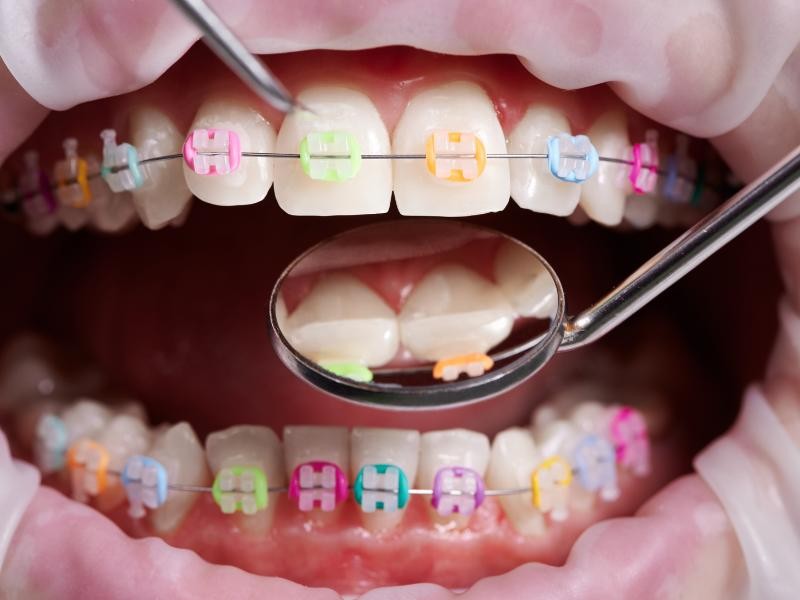
Knowing when to seek an orthodontist is essential to maintain oral health, prevent complications and ensure a functional and harmonious smile.
Many people believe that orthodontic monitoring is just an aesthetic issue, but several signs can indicate changes in bite, tooth alignment and even chewing function.
Identifying these signs early allows you to start treatment in a simpler, more comfortable and predictable way.
At Alora Clínic , in Ramada, Odivelas, Lisbon, we use digital technology and personalized evaluation to accurately diagnose orthodontic changes and define the most appropriate treatment for each patient.
1. When should you look for an orthodontist?
You should seek an orthodontist whenever there are signs of dental misalignment, bite changes, functional discomfort or concerns related to the aesthetics of the smile.
Some important signs include:
- Misaligned Teeth;
- difficulty in chewing;
- irregular tooth wear;
- jaw pain;
- bursting when opening or closing the mouth;
- changes in speech;
- excessive spaces between teeth;
- Tooth Appendage.
In many cases, early treatment helps to avoid more complex problems in the future.
2. What is the ideal age for the first orthodontic evaluation?
The first orthodontic evaluation can be carried out in childhood, usually around 7 years of age.
In this phase, the orthodontist is able to observe the development of the dentition, the bone growth of the face and possible changes in the bite.
Early assessment allows:
- identify problems at an early stage;
- follow the growth of the dental arch;
- guide the correct development of the bite;
- reduce the complexity of future treatments.
3. What are the main signs that you are looking for an orthodontist?
There are several signs that may indicate the need for orthodontic evaluation.
Among the most common are:
- misaligned or overlapping teeth;
- cross bite;
- open bite;
- deep bite;
- excessive spaces between teeth;
- difficulty chewing;
- irregular tooth wear;
- pain or tension in the jaw;
- Aesthetic changes of the smile.
These signs can affect both aesthetics and oral function.
4. What signs may indicate the need for urgent evaluation?
Some symptoms deserve attention more rapid, especially when they cause pain or functional difficulty.
Among the signs that may warrant priority evaluation are:
- severe jaw pain;
- significant difficulty chewing;
- jaw lock;
- accentuated tooth wear;
- sudden tooth movement;
- dental trauma;
- Persistent functional discomfort.
In these cases, orthodontic monitoring can help avoid aggravations.
5. How to identify orthodontic signs in childhood?
Some changes can be identified early on by parents or caregivers.
Among the most common signs in children are:
- frequent oral breathing;
- prolonged pacifier use;
- finger suction;
- difficulty in chewing;
- early tooth misalignment;
- cross bite;
- speech changes.
Early monitoring allows you to correctly orient the growth of the dental arch.
6. Is it possible to look for an orthodontist just for aesthetic reasons?
Sim.
Many patients seek orthodontic treatment to improve the aesthetics of the smile, increase self-esteem and achieve greater facial harmony.
Situations frequently associated with aesthetic demand include:
- Misaligned Teeth;
- spaces between teeth;
- asymmetry of the smile;
- Tooth Appendage.
Currently, there are modern and discreet solutions, such as invisible aligners, that allow the treatment to be carried out with greater comfort and discretion.
7. What problems can the orthodontist treat?
The orthodontist is responsible for the diagnosis, prevention and correction of changes related to:
- dental alignment;
- bite;
- facial bone growth;
- chewing function;
- dental position;
- smile harmony.
Among the most frequently discussed problems stand out:
- dental dressing;
- cross bite;
- open bite;
- deep bite;
- diastemas;
- Functional changes of the jaw.
8. What are the benefits of orthodontic treatment?
Orthodontic treatment offers important benefits for oral health and quality of life.
- improvement of the aesthetics of the smile;
- ease in oral hygiene;
- improvement of chewing;
- reduction of tooth wear;
- bite balance;
- prevention of gum problems;
- improvement of self-esteem.
In many cases, the treatment also contributes to greater functional comfort on a day-to-day basis.
9. How does a consultation with the orthodontist work?
The orthodontic consultation begins with a detailed clinical evaluation.
The process may include:
- bite analysis;
- evaluation of dental alignment;
- digital intraoral scanning;
- clinical photographs;
- digital radiographs;
- custom orthodontic planning.
Digital technology allows greater accuracy in diagnosis and helps to predict evolution of treatment.
10. Where to perform orthodontic evaluation?
Orthodontic evaluation should be carried out in a clinic with experience in digital orthodontics, accurate diagnosis and personalized follow-up.
At Alora Clínic , in Ramada, Odivelas, Lisbon, we use intraoral scanning, 3D digital planning and personalized orthodontic monitoring to provide more predictable, comfortable and efficient treatments.
11. Conclusion
Knowing when to seek an orthodontist is essential to preserve oral health, improve chewing function and achieve a more harmonious smile.
Many signs may indicate the need for orthodontic evaluation, from bite changes to aesthetic concerns.
The earlier the problem is identified, the greater the chances of performing simpler and more predictable treatments.
At Alora Clínic , in Ramada, Odivelas, Lisbon, we offer personalized orthodontic evaluation with modern digital technology and individualized monitoring.
If you have identified some of these signs or want to improve the alignment of your smile, you can schedule an evaluation consultation with our team.