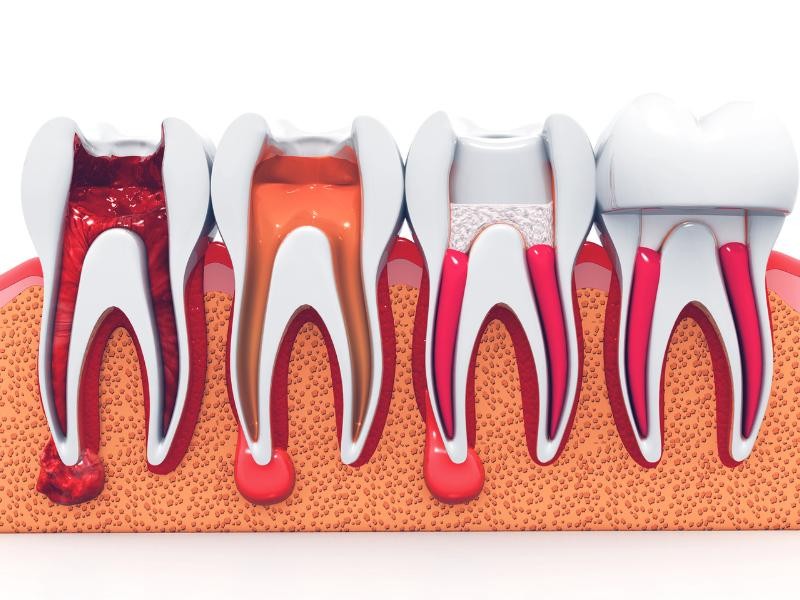
The dental devitalization is one of the most important treatments in modern dental medicine, being essential to preserve teeth compromised by inflammation or infection.
Many people have doubts about what this procedure is, when it should be performed and it causes pain.
In reality, dental devitalization is precisely the treatment that allows you to relieve intense pain, eliminate infections and save teeth that could be lost.
Thanks to digital technology and modern techniques, the procedure has become more comfortable, fast and predictable.
At Alora Clínic , in Ramada, Odivelas, Lisbon, we use advanced digital technology and personalized monitoring to provide safer and more comfortable treatments.
1. What is dental devitalization?
A dental devitalization is a procedure performed to treat the inner part of the tooth, known as dental pulp.
The pulp contains:
- nerves;
- blood vessels;
- connective tissue.
When this structure suffers inflammation or infection, it can cause severe pain and compromise the tooth.
The treatment consists of removing the compromised pulp, cleaning the inside of the tooth and sealing the root canals.
2. What is dental devitalization for?
Dental devitalization serves to:
- eliminate infections;
- relieve pain;
- preserve the natural tooth;
- avoid extractions;
- restore chewing function;
- protect oral health.
Without treatment, the infection can spread to gums, bone and other structures.
3. How is dental devitalization done?
The procedure is carried out in several carefully planned steps.
Initially, a diagnosis is made through clinical evaluation and digital examinations.
Then:
- local anesthesia is applied;
- the tooth is carefully opened;
- the inflamed pulp is removed;
- the canals are clean and disinfected;
- the inside of the tooth is sealed;
- the final restoration is carried out.
In many cases, a dental crown may be needed to strengthen the structure of the tooth.
4. When is dental devitalization necessary?
Dental devitalization is indicated when the pulp of the tooth is compromised.
The most common situations include:
- deep caries;
- dental infections;
- trauma;
- tooth fractures;
- pulpal inflammation;
- abscesses;
- Persistent pain.
Early diagnosis helps to avoid more serious complications.
5. What are the symptoms that may indicate the need for devitalization?
Some signs should be evaluated quickly by a dentist.
- Constant toothache;
- intense sensitivity to hot or cold;
- chewing pain;
- gum swelling;
- tooth discoloration;
- presence of pus;
- pulsating sensation.
These symptoms may indicate inflammation or infection of the dental pulp.
6. Does dental devitalization hurt?
Currently, the procedure is performed with modern anesthesia and minimally invasive techniques.
In most cases, dental devitalization does not cause significant pain during treatment.
Often, the patient feels more pain before the procedure, due to the existing infection, than during the treatment itself.
7. What are the main causes that lead to the need for devitalization?
The most common causes include:
- untreated caries;
- dental trauma;
- severe wear and tear;
- fractures;
- deep restorations;
- bruxism;
- bacterial infections.
Many of these situations can be avoided through prevention and regular monitoring.
8. What happens if dental devitalization is postponed?
Delaying treatment can lead to worsening of the infection and significantly increase discomfort.
Among the main risks are:
- intense pain;
- abscesses;
- facial swelling;
- tooth loss;
- bone infections;
- spread of infection.
The earlier the treatment is performed, the greater the chances of preserving the tooth.
9. Are dental devitalization and endodontic treatment the same thing?
Sim.
The technical term is endodontic treatment , but it is popularly known as dental devitalization.
Both refer to the treatment of the inner part of the tooth, especially the dental pulp.
10. Is it possible to avoid the need for devitalization?
In many cases, yes.
Some care helps to significantly reduce the risk:
- good oral hygiene;
- regular consultations;
- early caries treatment;
- use of protector in sports;
- control of bruxism;
- balanced diet.
Prevention remains the best approach.
11. What is the care after dental devitalization?
After the procedure, some care helps to ensure better recovery:
- avoid very hard foods initially;
- follow the prescribed medication correctly;
- maintain good oral hygiene;
- attend follow-up consultations;
- perform the definitive restoration of the tooth.
Proper monitoring is essential to preserve the durability of the treatment.
12. Is devitalization indicated for constant pain?
Yes, often.
Persistent dental pain is one of the most common signs of pulp compromise.
When there is inflammation or infection of the pulp, dental devitalization is usually the most effective solution to eliminate pain and save the tooth.
13. Can devitalization save a tooth?
Sim.
This is precisely one of the main objectives of treatment.
By eliminating the infection and preserving the dental structure, devitalization allows:
- maintain the natural tooth;
- avoid extractions;
- preserve chewing;
- maintain the aesthetics of the smile;
- prevent bone loss.
14. How does digital technology improve dental devitalization?
Digital dentistry has brought important advances to endodontic treatments.
Among the technologies used stand out:
- digital radiography;
- CT scan;
- clinical magnification;
- electronic apical locators;
- modern rotary systems.
These resources make treatment:
- more accurate;
- more comfortable;
- faster;
- most predictable.
15. Where to perform dental devitalization?
Treatment should be carried out in a clinic with experience in endodontics, digital diagnosis and personalized follow-up.
At Alora Clínic , in Ramada, Odivelas, Lisbon, we use modern technology and a humanized approach to provide safer, more comfortable and effective treatments.
16. Conclusion
The dental devitalization is a fundamental procedure to save teeth compromised by inflammation or infection.
Thanks to modern dental medicine, the treatment has become more comfortable, fast and predictable.
Identifying symptoms early and seeking professional follow-up makes all the difference to preserve oral health.
At Alora Clínic , in Ramada, Odivelas, Lisbon, we offer advanced digital technology, personalized monitoring and modern treatments to take care of your smile.
If you have dental pain or want to have an evaluation, you can schedule a consultation with our team.