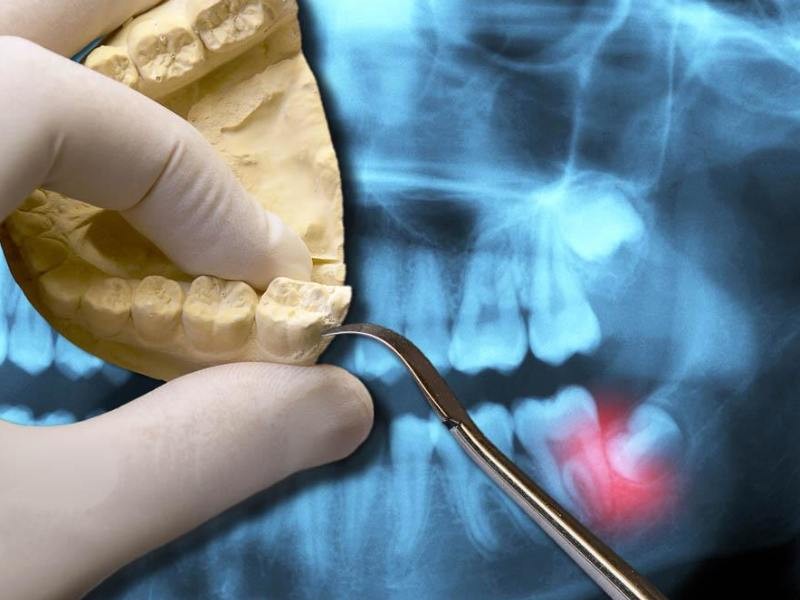
The wisdom teeth , also known as third molars, are the last teeth to be born in the mouth.
Normally, they arise between the ages of 17 and 25, a phase of life associated with maturation, which is why they were also known as “judge's teeth”.
Despite being very common, wisdom teeth continue to generate many doubts: should they be removed? Do all the wisdom teeth cause problems? Does surgery hurt? What is the best age to extract?
The truth is that each case must be evaluated individually, through clinical examination and appropriate imaging.:ContentReference [oaicite:0] {index=0}
At Alora Clínic , in Ramada, Odivelas, Lisbon, we carry out personalized evaluation of the wisdom teeth, using digital diagnostics and modern techniques to provide safer and more comfortable treatments.
1. What are the wisdom teeth?
The wisdom teeth or third molars are the last teeth of the dental arch.
They are located after the first and second molars and were of great importance in the chewing of prehistoric man, whose diet required greater crushing capacity.:ContentReference [oaicite:1] {index=1}
With the evolution of human nutrition, the third molars have become less functional, and it is currently common for there to be people who do not even develop them.:ContentReference [oaicite:2] {index=2}
2. Don't all people have wisdom teeth?
No.
Some people may have:
- the four wisdom teeth;
- just one or two;
- no third molar.
This happens due to the evolutionary changes of the human species, as wisdom teeth gradually tend to lose function.:ContentReference [oaicite:3] {index=3}
Still, most people have at least one wisdom tooth.
3. When is it necessary to remove the wisdom teeth?
Not all wisdom teeth need to be removed.
The decision depends on clinical, radiographic and, in some cases, tomographic evaluation.:ContentReference [oaicite:4] {index=4}
Wisdom teeth can remain in the mouth when:
- were born completely;
- do not cause pain;
- do not present caries;
- do not cause gingival inflammation;
- allow proper hygiene;
- will not harm neighboring teeth.
Even in these cases, regular monitoring is important.
4. In what situations is wisdom tooth extraction recommended?
There are several situations in which removal may be indicated.
- difficult to treat caries;
- lack of space in the arcade;
- recurrent gingival inflammation;
- infections;
- frequent gold;
- teeth included or impacted;
- pressure on neighboring teeth;
- cyst formation;
- risk of tooth resorption.
In many cases, impacted wisdom teeth can compromise adjacent teeth and cause future complications.:ContentReference [oaicite:5] {index=5}
5. What is an impacted wisdom tooth?
An impacted wisdom tooth is one that cannot erupt correctly.
This can happen due to lack of space or improper position within the bone.
Some wisdom teeth remain:
- totally within the bone;
- partially erupted;
- inclined;
- pressing other teeth.
In these cases, pain, infections and other complications may arise.
6. What is the best age to remove the wisdom teeth?
The evaluation of the wisdom teeth should ideally take place before the age of 20.:ContentReference [oaicite:6] {index=6}
At this stage, the roots are still developing, making surgery generally simpler and less traumatic.
In addition, recovery tends to be faster.
However, removal can be carried out at any age, as long as there is a clinical indication.
7. How is the surgery of the wisdom teeth done?
Wisdom tooth extraction is usually performed in an office setting, with local anesthesia.:ContentReference [oaicite:7] {index=7}
The patient remains calm during the procedure, but without feeling pain.
Currently, surgical techniques are much more modern, delicate and minimally traumatic.
In many cases, it is possible to remove all four wisdom teeth in the same surgery.
8. Does wisdom tooth surgery hurt?
During the procedure, no.
Local anesthesia prevents pain during surgery.
After the procedure, there may be:
- slight discomfort;
- swelling;
- sensitivity;
- temporary difficulty chewing.
However, these symptoms are usually well controlled with appropriate medication and postoperative guidelines.:ContentReference [oaicite:8] {index=8}
9. What are the risks of wisdom tooth surgery?
Like any surgical procedure, the removal of the wisdom teeth has some risks, although they are generally controllable.
Among the possible complications are:
- swelling;
- pain;
- hemorrhage;
- infection;
- temporary difficulty opening the mouth;
- paresthesia in specific cases.
Paresthesia is a temporary change in sensitivity, more associated with the lower wisdom teeth.:ContentReference [oaicite:9] {index=9}
10. What is paresthesia?
Paresthesia is a persistent feeling of numbness, usually related to proximity of the jaw nerves.
Although rare, it can occur after more complex extractions of the lower wisdom teeth.
Currently, digital diagnosis and computed tomography help to significantly reduce this risk.
11. How long does it take to recover?
The recovery time varies according to:
- complexity of surgery;
- position of the wisdom tooth;
- age of the patient;
- individual response of the organism.
In general, the first days require more care, but recovery tends to evolve progressively.
12. What care should I take after surgery?
Some care helps to promote a more comfortable recovery:
- apply ice to the face;
- follow medication correctly;
- avoid physical exertion;
- keep food cooler and softer;
- no smoking;
- avoid intense bouts;
- follow all clinical guidelines.
Proper postoperative is essential for good healing.
13. Do all wisdom teeth cause dental crowding?
Not always.
There is a lot of scientific discussion about the influence of wisdom teeth on tooth misalignment.
However, in some cases, the lack of space and the pressure exerted by the third molars can contribute to changes in the dental arch.
Individualized orthodontic evaluation is important.
14. Where to evaluate or remove the wisdom teeth?
The ideal is to look for a clinic with experience in oral surgery, digital diagnosis and personalized follow-up.
At Alora Clínic , in Ramada, Odivelas, Lisbon, we carry out a complete clinical and imaging evaluation to define the best approach for each case, using modern and minimally invasive techniques.
15. Conclusion
The wisdom teeth may remain healthy and functional in some patients, but in many cases they can cause pain, infections, caries and other complications.
Early assessment is essential to identify possible risks and define the most appropriate time for treatment or follow-up.
Thanks to modern dental medicine, wisdom tooth surgeries have become much more comfortable, safe and predictable.
At Alora Clínic , in Ramada, Odivelas, Lisbon, we provide personalized monitoring and advanced digital technology for evaluation and treatment of wisdom teeth.
If you want to evaluate your third molars or clarify doubts about wisdom tooth extraction, you can schedule a consultation with our team.