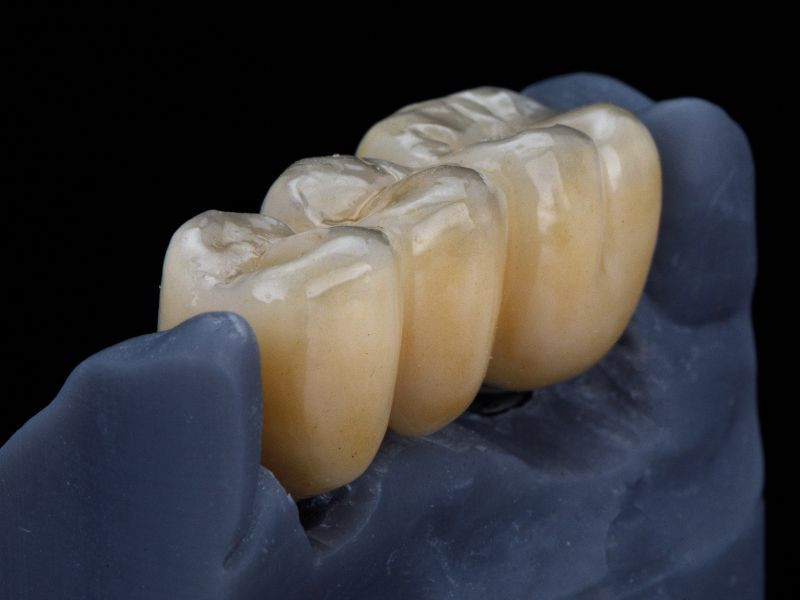
Ceramic Crowns: The Secret to a Natural and Resilient Smile
Find out when they are indicated, how they work and why they are the preferred choice to restore compromised teeth with a totally natural result.
Ceramic crowns are today synonymous with excellence in restorative dental medicine - they combine mechanical resistance, biological compatibility and an indistinguishable appearance from natural teeth.
When a tooth is weakened by deep decay, fracture, severe wear or after a devitalization treatment, its structure may no longer be sufficient to withstand the normal forces of mastication gating. In these cases, the ceramic crown appears as the most appropriate solution - not only to protect the remaining tooth, but also to restore the function and aesthetics of the smile in a lasting way.
What Are Ceramic Crowns?
A dental crown is a structure that completely covers a tooth, from the gingival line to the top of the clinical crown. It functions as a protective “cap” that restores the shape, volume and chewing function of the damaged tooth.
Ceramic crowns are made entirely of ceramic material or in combination with zirconia structure, without any metal inside. This composition allows a translucency and a tonality very close to those of natural teeth, making them practically indistinguishable to the eye.
“The current ceramic reproduces with great fidelity the texture, color and translucency of natural teeth. In many cases, it is impossible to distinguish a well-made crown from the original tooth.”
When are Ceramic Crowns Recommended?
- Teeth with extensive caries in which conventional restoration is no longer enough
- Fractured or split teeth that compromise chewing or aesthetics
- Devitalized teeth (treated with endodontics), which become more fragile and prone to fracture
- Teeth with severe wear caused by bruxism or other parapfunctional habits
- Rehabilitation on dental implants (crown on implant)
- Cases of structural malformation or pigmentation that does not respond to whitening
- Replacing old metal crowns with a more modern aesthetic solution
Ceramic Crowns vs. Metal Crowns
For decades, metal or metal-ceramic crowns (with metal inside) have been the standard in oral rehabilitation. Today, with the evolution of high-strength ceramic materials, the pure ceramic option is clearly preferable in terms of aesthetics and biocompatibility.
✦ Ceramic Crowns
- Natural and translucent appearance
- No gray halo on the gingival margin
- Excellent biocompatibility
- Resistant to stains
- Long-term aesthetic solution
- Ideal for anterior and posterior teeth
How does the Placement Process take place?
The dentist evaluates the tooth, performs the necessary examinations and plans the treatment, including the choice of the material and the shade that best suits the patient's smile.
The tooth is prepared under local anesthesia: it is lightly worn to create space for the crown, without discomfort during the procedure.
A precision molding or a 3D digital scan is performed that will be sent to the laboratory for the personalized manufacture of the crown.
While the final crown is produced, a temporary crown is placed to protect the tooth and maintain aesthetics.
The definitive crown is tested, adjusted to the level of color and bite, and then permanently cemented to the prepared tooth.
How to Care for Your Ceramic Crowns
Ceramic crowns are highly resistant, but their longevity depends largely on daily care. Maintain strict oral hygiene — bidaily brushing with fluoride paste, flossing and, if possible, oral irrigator. Regular check-ups and professional cleaning are also essential.
Avoid biting hard objects such as pens, ice, or extremely hard food. In case of bruxism, the dentist may recommend a night protection drip to preserve both the crowns and the natural teeth.
Frequently Asked Questions
With proper care and regular consultations, a ceramic crown can last anywhere from 10 to 20 years or more. Longevity depends on the location of the tooth, the quality of manufacture and the hygiene habits of the patient.
The procedure is performed under local anesthesia, so you do not feel pain during the preparation of the tooth. After the anesthesia wears off, there may be some sensitivity for a few days, which is completely normal and transient.
Ceramics have a much higher resistance to stains compared to natural teeth or composite resins. Coffee, tea and other pigmented foods have minimal impact, especially with good oral hygiene.
No. Ceramic crowns do not respond to tooth whitening, as their color is defined during manufacture. Therefore, it is important to adjust the shade of the crown before any whitening treatment, or to perform the bleaching beforehand.
Restore Your Smile Naturally
At Alora Clínic, we work with the best technologies in ceramic dentures to guarantee lasting and aesthetically perfect results. Schedule a consultation and evaluate your options with our specialized team.
Schedule Consultation